
Product Introduction
The TPS563201 from Texas Instruments is a synchronous step-down buck converter designed for compact, efficient DC-DC regulation. The published UAVCHIP product data specifies 4.5 V to 17 V input range, adjustable output from 0.76 V to 7 V, 3 A continuous output capability with 4 A peak, fixed 570 kHz switching frequency, and a compact SOT-23-6 package. It also lists peak efficiency up to 95 percent, 110 µA quiescent current, built-in 4 ms soft-start, and protection features such as cycle-by-cycle current limit, output overvoltage protection, and thermal shutdown.
In drone electronics, that specification set is highly practical. A typical UAV board must step battery or intermediate rail voltage down to clean 5 V, 3.3 V, or sometimes lower logic rails for MCU, IMU, GPS, radio, OSD, and storage devices. The power stage needs to be efficient, compact, and stable under dynamic load changes. TPS563201 has been widely adopted in that role because it fits those constraints without demanding an oversized layout or BOM.
Good power design rarely gets marketing attention, but it determines whether the rest of the system can perform. A stable buck converter is often the quiet foundation beneath seemingly unrelated features such as flight stability, telemetry consistency, and sensor accuracy.
Why TPS563201 is relevant in UAV boards
- Comfortable input range for many common drone intermediate rails.
- 3 A output supports multiple digital rails and compact subsystem loads.
- Small package is attractive for dense FC and companion boards.
- Integrated protections reduce field-failure risk in real products.
Drone Application Scenarios
One of the most common uses of TPS563201 is generating the 3.3 V rail on a flight controller. That rail often powers the MCU, IMU, barometer, Flash, and various digital peripherals. If that rail is noisy or droops under transient load, flight stability and sensor trust both suffer. A dependable synchronous buck helps keep the digital core calm.
The device is also useful as a 5 V-to-3.3 V stage on accessory boards such as GPS modules, radio boards, and interface hubs. In more complex UAV systems, multiple local regulators may be preferred over routing one single shared rail everywhere. That improves noise isolation and shortens sensitive power loops.
For payload-adjacent electronics, TPS563201 can support compact secondary rails where efficiency and board area both matter. Because drones are power-constrained and mechanically compact, a regulator that balances performance with footprint becomes commercially attractive.
Technical Parameter Analysis
| Parameter | TPS563201 Value | Why It Matters in UAV Power Design |
|---|---|---|
| Topology | Synchronous step-down buck | Provides efficient conversion for digital rails without wasting excessive energy. |
| Input Voltage | 4.5 V to 17 V | Fits many intermediate drone rails and board-level regulation paths. |
| Output Voltage | 0.76 V to 7 V adjustable | Flexible enough for common logic, sensor, and MCU supply targets. |
| Output Current | 3 A continuous, 4 A peak | Supports dense digital subsystems and transient load changes. |
| Switching Frequency | 570 kHz fixed | Affects inductor choice, ripple behavior, and EMI planning. |
| Efficiency | Up to 95% at 5 V to 3.3 V, 3 A | Important for thermal control and battery endurance. |
| Quiescent Current | 110 µA | Useful in systems that care about light-load and standby behavior. |
| Soft-Start | Built-in 4 ms | Helps prevent harsh startup events on sensitive rails. |
| Package | SOT-23-6 | Compact option for tight UAV PCB area budgets. |
These specifications make sense because they align with the real power needs of drone electronics. A board designer rarely wants an oversized power stage on a small FC. They want a regulator that is efficient enough to stay cool, strong enough to support combined digital loads, and compact enough not to consume the entire layout budget. TPS563201 fits that profile well.
The 570 kHz switching frequency is also a practical midpoint. It helps keep passive components reasonably small while remaining within a range many designers already know how to filter and layout. As always, the real result depends on PCB execution, but the device gives a sensible starting point.
Why Clean Power Matters to Flight Performance
Power integrity is one of the hidden determinants of drone reliability. An unstable rail can create GPS instability, serial communication glitches, RF noise, sensor offsets, brownout resets, or strange intermittent behavior that is difficult to reproduce on the bench. When those symptoms show up, teams often blame firmware first. That wastes time.
Choosing the right regulator helps, but layout is equally important. Current loops should be tight, grounding should be controlled, decoupling should be close, and noisy switching nodes should be kept away from sensitive analog or RF regions. A well-chosen regulator on a poor layout can still underperform badly.
For commercial UAV products, this is not only an engineering concern. It becomes a support concern, a returns concern, and a reputation concern. Good regulators protect product experience.
Alternative Models
Alternative power parts may be appropriate depending on voltage range, current demand, and thermal objectives. But the replacement decision should be driven by rail requirements, not by habit.
- TPS5430: Useful when a wider input voltage range is required in a 3 A buck solution.
- MP2307: Commonly considered in compact 3 A UAV power rail designs.
- Other higher-current buck stages: Better when the board must power heavier digital payloads or multiple downstream rails.
If you already have a validated design built around TPS563201, continuity is often the safest path. If you are creating a new board and your load profile or input rail differs significantly, then comparing alternatives is reasonable.
Selection Advice for Buyers and Hardware Teams
For procurement teams, the important question is whether the regulator matches the real board workload and sourcing quality requirements. Power components are not a place to become careless. A questionable part can create unpredictable field failures that are expensive to diagnose.
For hardware engineers, the answer is more nuanced: evaluate load transients, startup sequencing, thermal headroom, and EMI behavior in your exact placement context. A part that looks perfect in a generic converter table may still be wrong for your stack-up or enclosure.
For service and sustaining teams, a proven regulator like TPS563201 is valuable because its behavior is already known. That reduces uncertainty when you need to keep a production platform alive without introducing new power-related risk.
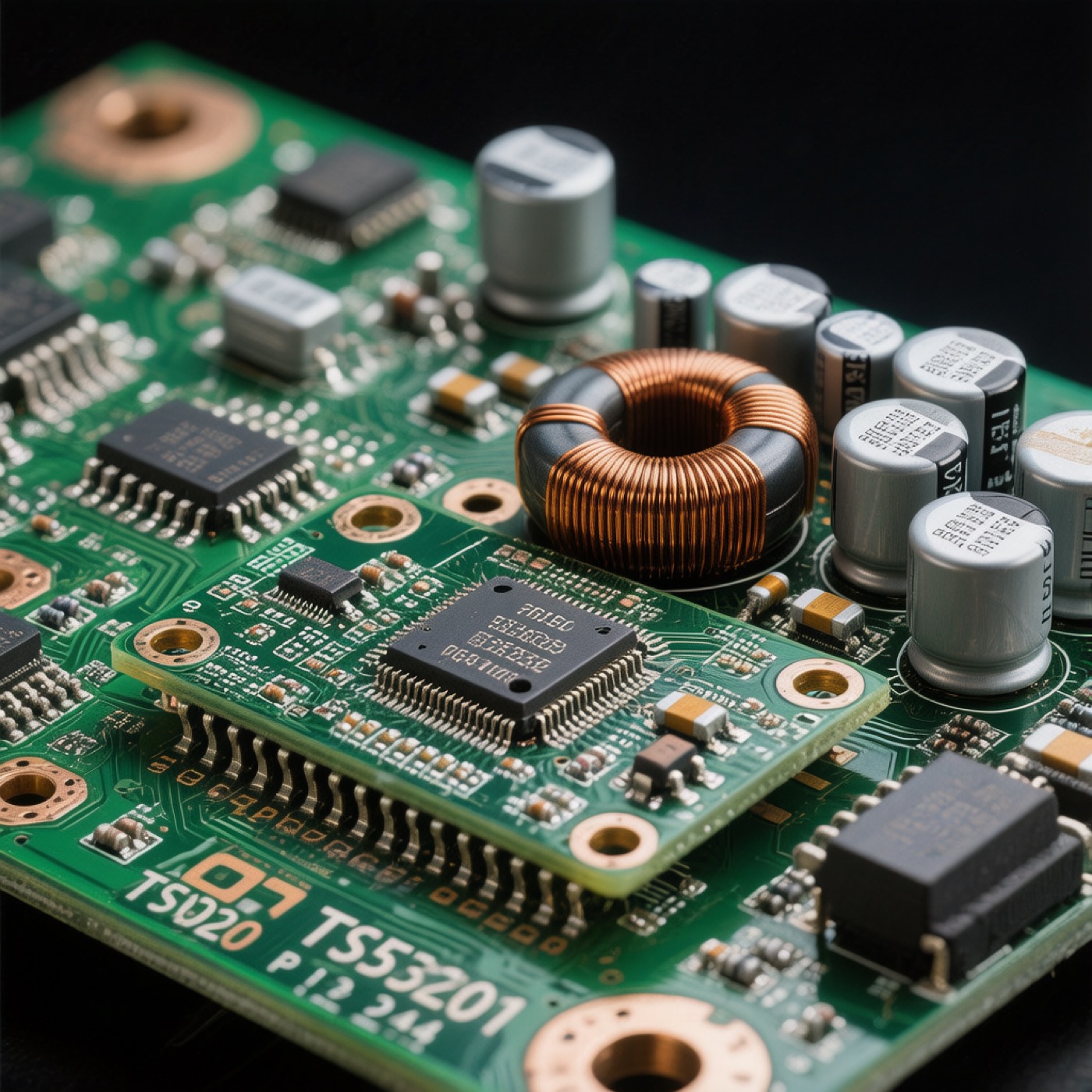
Need TPS563201 for a drone power rail design?
UAVCHIP can help with availability, quote response, and sourcing support for compact UAV power-management parts.
View Product Page Submit RFQNeed related parts or pricing?
Use the product pages below for quick reference, or send your BOM for a direct quote.
Frequently Asked Questions
For TPS563201 Drone Power Supply Guide: 3A Buck Specs, Rails, and Design Tips, the practical answer depends on your interface budget, firmware target, layout quality, and sourcing requirements. The safest approach is to validate the part in the final hardware environment before locking it into production.
For TPS563201 Drone Power Supply Guide: 3A Buck Specs, Rails, and Design Tips, the practical answer depends on your interface budget, firmware target, layout quality, and sourcing requirements. The safest approach is to validate the part in the final hardware environment before locking it into production.
For TPS563201 Drone Power Supply Guide: 3A Buck Specs, Rails, and Design Tips, the practical answer depends on your interface budget, firmware target, layout quality, and sourcing requirements. The safest approach is to validate the part in the final hardware environment before locking it into production.
Treat replacement parts as engineering changes, not purchasing shortcuts. Even when the package and basic specs look close, you still need to confirm behavior under your own firmware, layout, and environmental conditions.