
Product Introduction
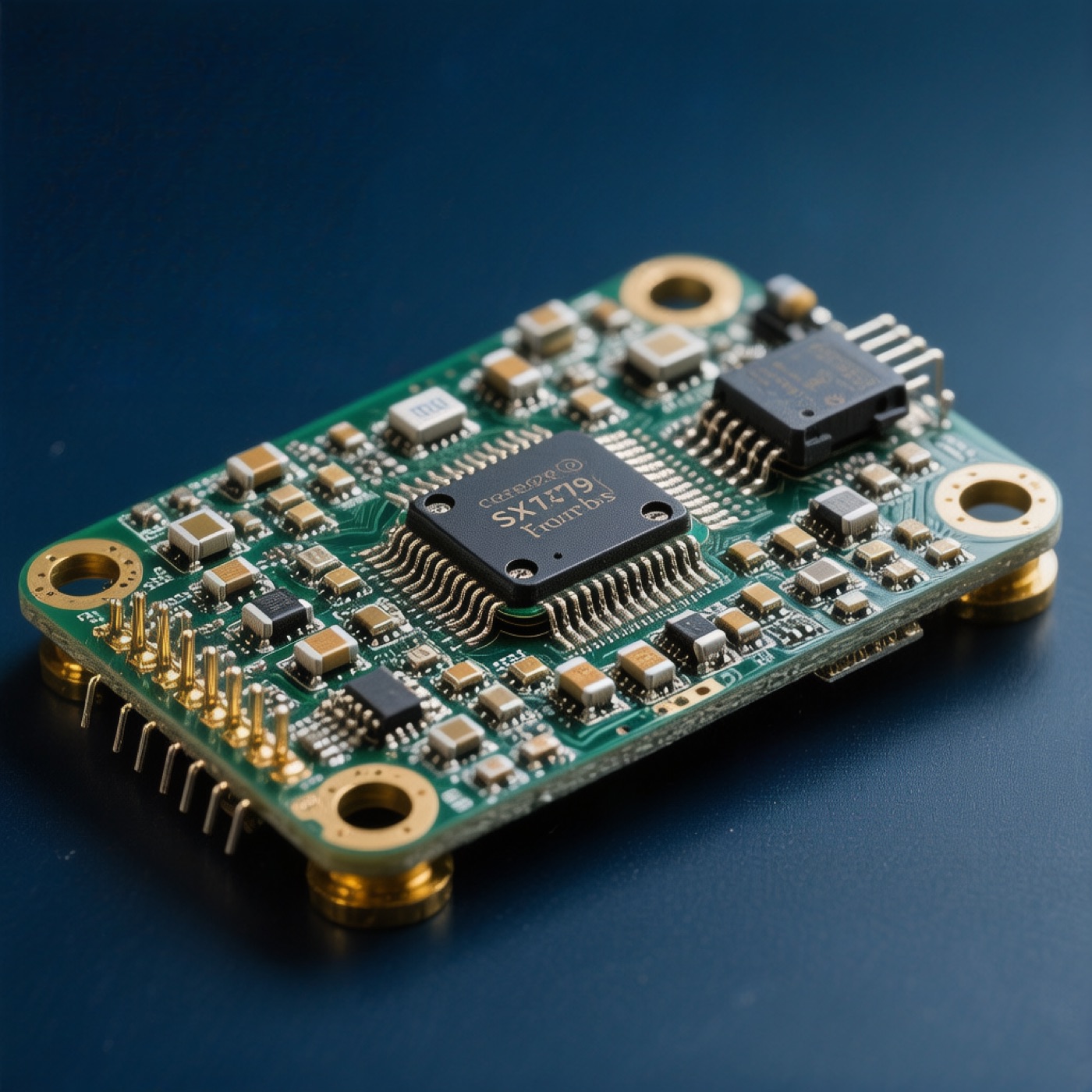
The SX1276 from Semtech is one of the landmark LoRa transceivers in embedded RF design. It supports LoRa, FSK, GFSK, MSK, GMSK, and OOK modulation, covers a very broad 137 МГц — 1020 МГц range, reaches up to +20 dBm transmit power, and offers receive sensitivity down to −148 dBm in LoRa mode. In drone terms, that combination means it can support robust telemetry links over substantial distance when paired with the right antennas and system settings.
The published UAVCHIP product data also lists a 168 dB maximum link budget, supply range from 1,8 В — 3,7 В, continuous receive current around 9.9 mA, and sleep current around 200 nA. The device comes in a TQFN-28 package and remains highly relevant in long-range telemetry radios, UAV data links, and radio subsystems derived from proven LoRa designs.
That matters because drone radio systems are often evaluated too simply. Teams compare only nominal frequency band or advertised power. In reality, long-range performance comes from the full RF budget. The SX1276 became valuable because it gives designers flexible modulation tools and a proven ecosystem to build around.
Why drone designers still care about SX1276
- Very strong sensitivity for low-rate, long-range telemetry links.
- Wide operating band coverage supports multiple regional plans.
- Mature LoRa ecosystem and strong field familiarity reduce design uncertainty.
- Useful balance between performance, power, and integration complexity.
Drone Application Scenarios
SX1276 is most relevant in long-range telemetry systems where the priority is dependable command, status, and mission data exchange rather than high-throughput video. Typical examples include MAVLink telemetry radios, remote mission-control links, low-bandwidth long-range sensor uplinks, and rural or industrial UAV operations where control confidence matters more than broadband payload data.
In fixed-wing and long-endurance multirotor platforms, the transceiver is especially useful because these aircraft often operate over terrain where LOS conditions vary and energy efficiency matters. A radio that can maintain useful communication at low data rates and modest current draw becomes strategically valuable.
The chip also makes sense in modular UAV ecosystems where designers want one radio family that can be tuned to multiple bands or regulatory environments. Its wide frequency support helps product teams develop variants without completely reinventing the RF architecture each time.
Technical Параметр Analysis
| Параметр | Значение SX1276 | Importance for UAV Telemetry |
|---|---|---|
| Frequency Range | 137 МГц — 1020 МГц | Supports broad band planning for regional telemetry variants. |
| Модуляция | LoRa, FSK, GFSK, MSK, GMSK, OOK | Gives flexibility between long-range resilience and conventional link styles. |
| Max TX Power | +20 dBm | Useful for strengthening uplink/downlink margin when regulations permit. |
| RX Чувствительность | −148 dBm in LoRa mode | Critical factor for long-range link reliability and weak-signal handling. |
| LoRa Bandwidth | 7.8 kHz to 500 kHz | Lets designers trade data rate against robustness and range. |
| Spreading Factor | SF6 to SF12 | Key tuning variable for link budget and throughput behavior. |
| Напряжение питания | 1,8 В — 3,7 В | Integrates well with common drone regulator architectures. |
| RX Current | 9.9 mA continuous | Important for endurance calculations on battery-powered airframes. |
| Package | TQFN-28, 5×5 mm | Compact enough for radio modules and custom telemetry boards. |
From a systems perspective, the big story is link budget. A radio with excellent sensitivity can often outperform a seemingly more powerful but noisier system. That is why SX1276 has had such a long life in UAV telemetry. It supports the kinds of low-rate, high-resilience links that matter when the aircraft is far away and reliable packet delivery is more important than raw throughput.
The bandwidth and spreading factor options are equally important. Designers can deliberately slow the link and increase robustness when the use case allows it. That makes SX1276 suitable for mission data, state telemetry, and other low-bandwidth but high-value communication paths.
Long-Range Design Trade-Offs
Long range is never free. More aggressive link settings typically mean lower throughput and higher on-air time. That affects latency, coexistence, and protocol design. A UAV telemetry system built around SX1276 should be honest about its purpose: if the job is dependable status and command over distance, the chip is excellent. If the job is high-speed payload transport, it is the wrong tool.
Antenna design, ground station implementation, and enclosure choices also matter heavily. The best transceiver cannot rescue a poor RF layout, weak matching network, or compromised antenna placement. Teams that treat the transceiver as the whole radio solution usually underperform.
For commercial drone programs, this means component sourcing must be paired with RF engineering discipline. The chip gives you capability. The product architecture determines whether that capability becomes a reliable field link.
Alternative Models
If you are evaluating other long-range RF options, start by deciding whether you need direct continuity or a newer efficiency/performance profile.
- SX1278: Often selected for 433 MHz-oriented telemetry implementations and related regional designs.
- SX1262: A newer LoRa option frequently considered for lower current and next-generation radio architectures.
- LR1110 class devices: Useful in more advanced architectures where additional features justify the platform shift.
If your radio ecosystem is already based on SX1276, continuity is often the safest choice for production and support. If you are starting a new long-range platform and power efficiency is a dominant KPI, then newer families deserve a closer look.
Buying and Рекомендации по закупкам
Purchasing teams should evaluate the complete link objective, not just a chip label. Ask whether the supplier understands drone telemetry use cases, whether the part is suitable for your band plan, and whether inventory is consistent for production. RF components can create subtle failures that only appear in field conditions, so traceability matters.
Engineering teams should qualify the entire chain: transceiver, matching network, antenna, regulator noise environment, and firmware settings. A strong transceiver is necessary but not sufficient. The real win comes from a stable, validated telemetry architecture.
For service and spare-part planning, exact continuity often beats speculative upgrades. If a UAV system is already tuned around SX1276 link behavior, keeping that same radio family can protect operational predictability.
Need SX1276 for a long-range UAV telemetry link?
UAVCHIP can support RF component sourcing, inventory checks, and quote response for proven telemetry designs.
Страница товара Запросить предложениеНужны сопутствующие компоненты или цены?
Используйте страницы товаров для быстрого просмотра или отправьте BOM для прямого расчёта.
Часто задаваемые вопросы
For SX1276 LoRa Drone Telemetry Guide: Long-Range RF Specs and Design Trade-Offs, Практический ответ зависит от вашего бюджета интерфейсов, целевой прошивки, качества разводки и требований к закупкам. Наиболее безопасный подход — валидировать компонент в финальной аппаратной среде до фиксации для производства.
For SX1276 LoRa Drone Telemetry Guide: Long-Range RF Specs and Design Trade-Offs, Практический ответ зависит от вашего бюджета интерфейсов, целевой прошивки, качества разводки и требований к закупкам. Наиболее безопасный подход — валидировать компонент в финальной аппаратной среде до фиксации для производства.
For SX1276 LoRa Drone Telemetry Guide: Long-Range RF Specs and Design Trade-Offs, Практический ответ зависит от вашего бюджета интерфейсов, целевой прошивки, качества разводки и требований к закупкам. Наиболее безопасный подход — валидировать компонент в финальной аппаратной среде до фиксации для производства.
Real range depends on the complete system: antenna efficiency, placement, power budget, environment, and protocol settings. Use the IC as one input to the link budget, not as a magic guarantee.