
Product Introduction
The MPU-6000 from InvenSense, now part of TDK, integrates a 3-axis gyroscope and 3-axis accelerometer into a single compact QFN-24 package. On paper that sounds ordinary. In drone hardware, it is anything but ordinary. The MPU-6000 became the reference IMU for an entire generation of flight controllers because it delivered a strong combination of stable SPI communication, predictable gyro behavior, proven firmware support, and broad availability.
According to the product specifications already published on UAVCHIP, the MPU-6000 supports gyro full-scale ranges of ±250, ±500, ±1000, and ±2000 degrees per second, accelerometer full-scale ranges of ±2g, ±4g, ±8g, and ±16g, and digital interfaces via SPI up to 20 MHz or I²C up to 400 kHz. It operates from 2.375 V to 3.46 V on VDD, uses a 4×4 mm QFN-24 package, and includes a 1024-byte FIFO plus auxiliary I²C support for external sensor expansion.
Those numbers matter because they map cleanly to actual drone requirements. The chip is fast enough for responsive attitude sensing, compact enough for stack-style FC boards, and mature enough that firmware teams already know how to configure, filter, and troubleshoot it. That maturity is why the MPU-6000 still holds value even though newer IMUs exist.
Why the MPU-6000 stayed relevant
- Reliable SPI behavior in mainstream flight-controller designs.
- Well-understood noise profile for Betaflight and other UAV firmware ecosystems.
- Strong community familiarity for tuning, debugging, and replacements.
- Balanced feature set without unnecessary complexity.
Drone Application Scenarios
The most common role of the MPU-6000 is as the primary inertial sensor on a multirotor flight controller. The gyro provides angular velocity for roll, pitch, and yaw stabilization, while the accelerometer assists with leveling, tilt detection, and complementary or Kalman-style fusion workflows. In practical use, this sensor feeds the control loop that keeps the drone flying at all.
It is equally useful in fixed-wing autopilots, gimbal stabilization boards, and certain robotics crossover products. In drones that prioritize stability and supportability over bleeding-edge loop rates, the MPU-6000 remains attractive because it is predictable. Predictability matters when a board will be manufactured, tuned, supported, and repaired by different teams across the product lifecycle.
For aftermarket replacement and maintenance, the part is also important because many legacy and current boards were designed specifically around its footprint and behavior. A compatible replacement on paper does not always mean a painless replacement in practice. Firmware target, mount orientation, driver tuning, and vibration filtering all interact with the chosen IMU.
Technical Parameter Analysis
| Parameter | MPU-6000 Value | Practical Impact in UAV Design |
|---|---|---|
| Sensor Type | 6-axis IMU | Provides the motion core needed for attitude stabilization and flight control. |
| Gyro Range | ±250 / ±500 / ±1000 / ±2000 °/s | Lets designers tune sensitivity for smooth cinematic rigs or aggressive acro quads. |
| Accel Range | ±2g / ±4g / ±8g / ±16g | Supports leveling, crash detection, and general inertial sensing needs. |
| Interface | SPI up to 20 MHz / I²C up to 400 kHz | SPI is strongly preferred in drone FCs because it reduces latency and improves stability. |
| Package | QFN-24, 4×4 mm | Compact enough for tight FC layouts while remaining common in UAV assembly workflows. |
| Supply Voltage | 2.375 V to 3.46 V | Matches standard 3.3 V digital rails on drone electronics. |
| Gyro Noise | 0.005 °/s/√Hz | Explains why filtering strategy and board vibration control matter so much. |
| FIFO Buffer | 1024 bytes | Helps smooth host communication and structured sensor data handling. |
| Auxiliary I²C | Up to 400 kHz | Allows external sensor connectivity in some embedded architectures. |
Numbers like gyro range and interface speed are easy to quote, but what really matters is how the chip behaves in a drone stack. A good IMU must work reliably on a vibrating PCB near switching regulators, ESCs, and motors. The MPU-6000 earned its reputation because thousands of products proved that it can do that when the layout and mounting are competent.
The 20 MHz SPI figure also matters because it reinforces a cleaner modern architecture than I²C-centric legacy sensor designs. In practical drone terms, SPI improves sensor read performance and lowers the risk of sluggish behavior under control-loop pressure. That is one reason the MPU-6000 became much more desirable than simpler hobby IMUs that relied on I²C only.
Why MPU-6000 Became the Industry Standard
It is tempting to think popularity comes from pricing alone, but the bigger story is trust. Betaflight, Cleanflight, ArduPilot, and many derivative stacks gained years of tuning experience around the MPU-6000. That means a board designer choosing it gets more than a sensor. They get a body of community knowledge about filtering, vibration handling, expected behavior, and troubleshooting steps.
Repair technicians also benefit. If a flight controller based on MPU-6000 develops instability, the debugging checklist is well known: verify mount softness, inspect regulator noise, check gyro orientation, review SPI wiring quality, and compare firmware target behavior. Mature parts lower uncertainty, and lower uncertainty lowers support cost.
From a sourcing standpoint, “standard” parts are powerful because they simplify conversations between engineering, purchasing, and production. Everyone already knows the role of the MPU-6000. That kind of shared understanding makes replacement planning, quoting, and risk assessment faster.
Vibration and Layout Considerations
Even the best IMU cannot compensate for bad board-level design. The MPU-6000 works best when power integrity is solid, ground return is clean, and the sensor is isolated from avoidable high-frequency switching noise. That means careful placement relative to buck converters, thoughtful decoupling, and sensible mechanical mounting. In multirotors, a soft-mounted FC or controlled damping stack can often improve data quality more than changing IMU model.
Because the chip is so widely used, many teams underestimate the layout details. That is a mistake. An MPU-6000 on a noisy board can perform worse than a newer sensor on a cleaner design. If you are buying finished boards, ask about design quality, not just which IMU name is printed on the spec sheet.
For product managers, this is important because customer complaints about “bad gyro” are often system issues rather than sensor issues. Strong component sourcing helps, but strong board engineering matters just as much.
Alternative Models
There are several replacement paths depending on whether your priority is direct continuity, better performance, or newer architecture. But replacements should be validated, not assumed.
- ICM-20602: A common modern 6-axis option for cost-sensitive and mid-performance boards.
- ICM-42688-P: Preferred in many newer premium FC designs where performance headroom matters more.
- BMI088: Chosen in certain industrial or vibration-robust contexts where application priorities differ.
If your goal is repairing an existing flight controller or keeping a proven platform stable, the safest sourcing path is often the exact MPU-6000. If you are launching a clean-sheet premium controller, then newer alternatives deserve evaluation. The answer depends on whether continuity or optimization is the higher business value.
Buying and Sourcing Advice
Counterfeit and reclaimed IMUs are a real issue in the component market. That is especially risky with motion sensors because a board may appear to boot normally while still suffering subtle stability problems under real flight conditions. For purchasing teams, traceability and lot confidence matter more than chasing the absolute lowest unit price.
Ask suppliers whether the part is genuine, whether packaging matches expected reel or tray standards, and whether the inventory is appropriate for production use rather than mixed-market spot sourcing. When a drone platform depends on predictable control behavior, the hidden cost of a questionable IMU is far greater than the visible savings on an invoice.
For engineering teams, it is useful to align sourcing and validation together. A stable IMU qualification process should include board-level noise review, firmware target confirmation, and sample flight or bench logging before committing to volume.
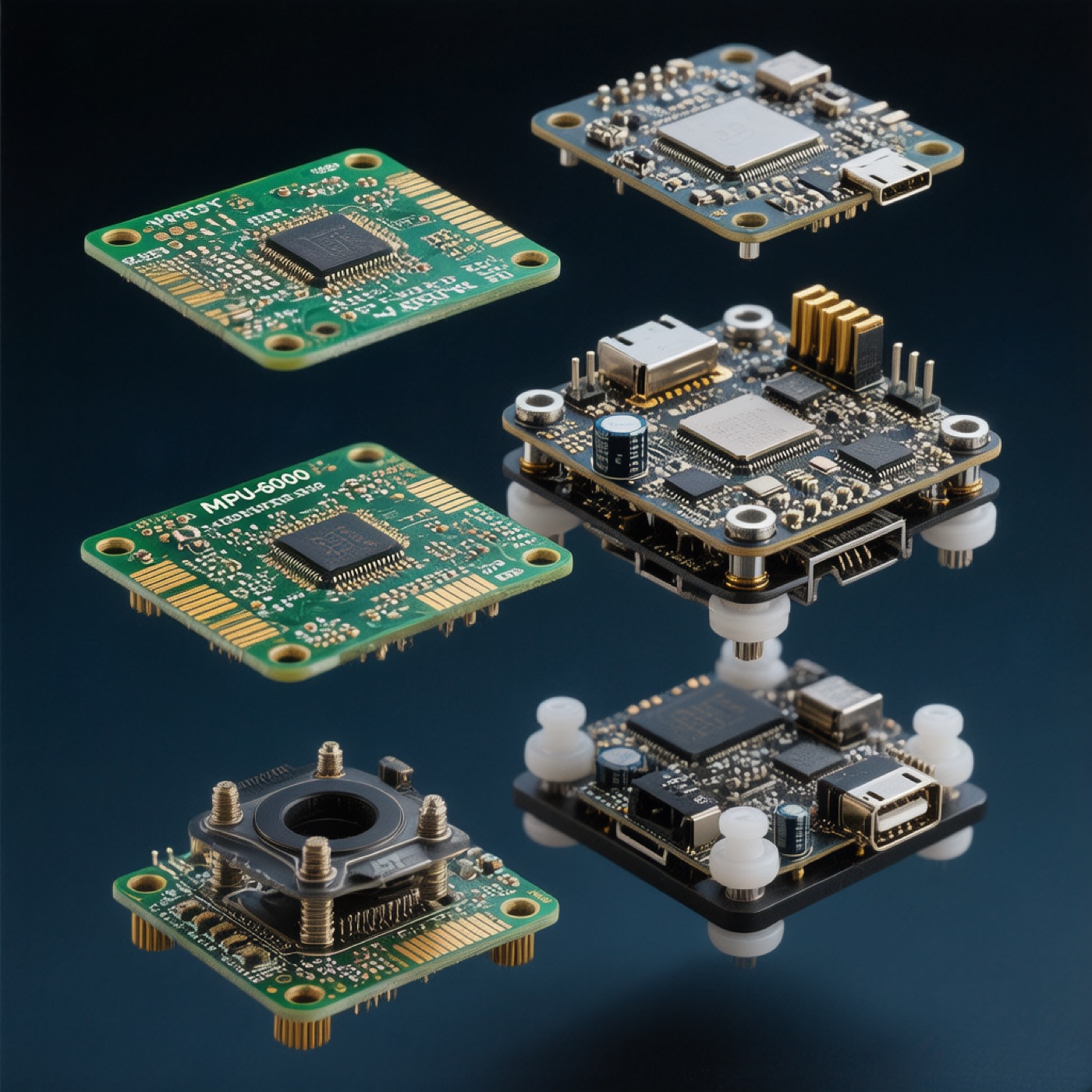
Looking for genuine MPU-6000 supply?
UAVCHIP can help with availability checks, replacement sourcing, and RFQ support for flight-controller IMUs.
View Product Page Submit RFQNeed related parts or pricing?
Use the product pages below for quick reference, or send your BOM for a direct quote.
Frequently Asked Questions
For MPU-6000 Drone IMU Guide: Specs, Flight Performance, and Replacement Options, the practical answer depends on your interface budget, firmware target, layout quality, and sourcing requirements. The safest approach is to validate the part in the final hardware environment before locking it into production.
For MPU-6000 Drone IMU Guide: Specs, Flight Performance, and Replacement Options, the practical answer depends on your interface budget, firmware target, layout quality, and sourcing requirements. The safest approach is to validate the part in the final hardware environment before locking it into production.
For MPU-6000 Drone IMU Guide: Specs, Flight Performance, and Replacement Options, the practical answer depends on your interface budget, firmware target, layout quality, and sourcing requirements. The safest approach is to validate the part in the final hardware environment before locking it into production.
For MPU-6000 Drone IMU Guide: Specs, Flight Performance, and Replacement Options, the practical answer depends on your interface budget, firmware target, layout quality, and sourcing requirements. The safest approach is to validate the part in the final hardware environment before locking it into production.